Writing.
Engineering notes, research, and news from the Arpuro team.
Blog for longer pieces. Field Notes for technical writing. Newsroom for announcements, releases, and press.
Perspective
Blog
-
Diffuse emissions, PM, and industry 4.0: a wry look at development of SOTA 2019-2026
In this post I provide a BTS perspective on development of SOTA for PM measurements 2019-2026, based on experiences from a number of R&D projects. This is done on the backdrop of the 2023 report by NEA and Norce about "Monitoring of diffuse emissions to air from industry".
-

The quest for tangible RoI from the use of generative AI for interpreting dust sensor data in metallurgical industry
Grim Gjønnes pushes back on the MIT finding that 95% of organisations see no ROI from generative AI. Using Arpuro's dust-monitoring deployments as case studies, he sketches concrete returns in heavy industry: cleaning costs, avoided failures, smarter capex.
From the engineering team
Field Notes
-
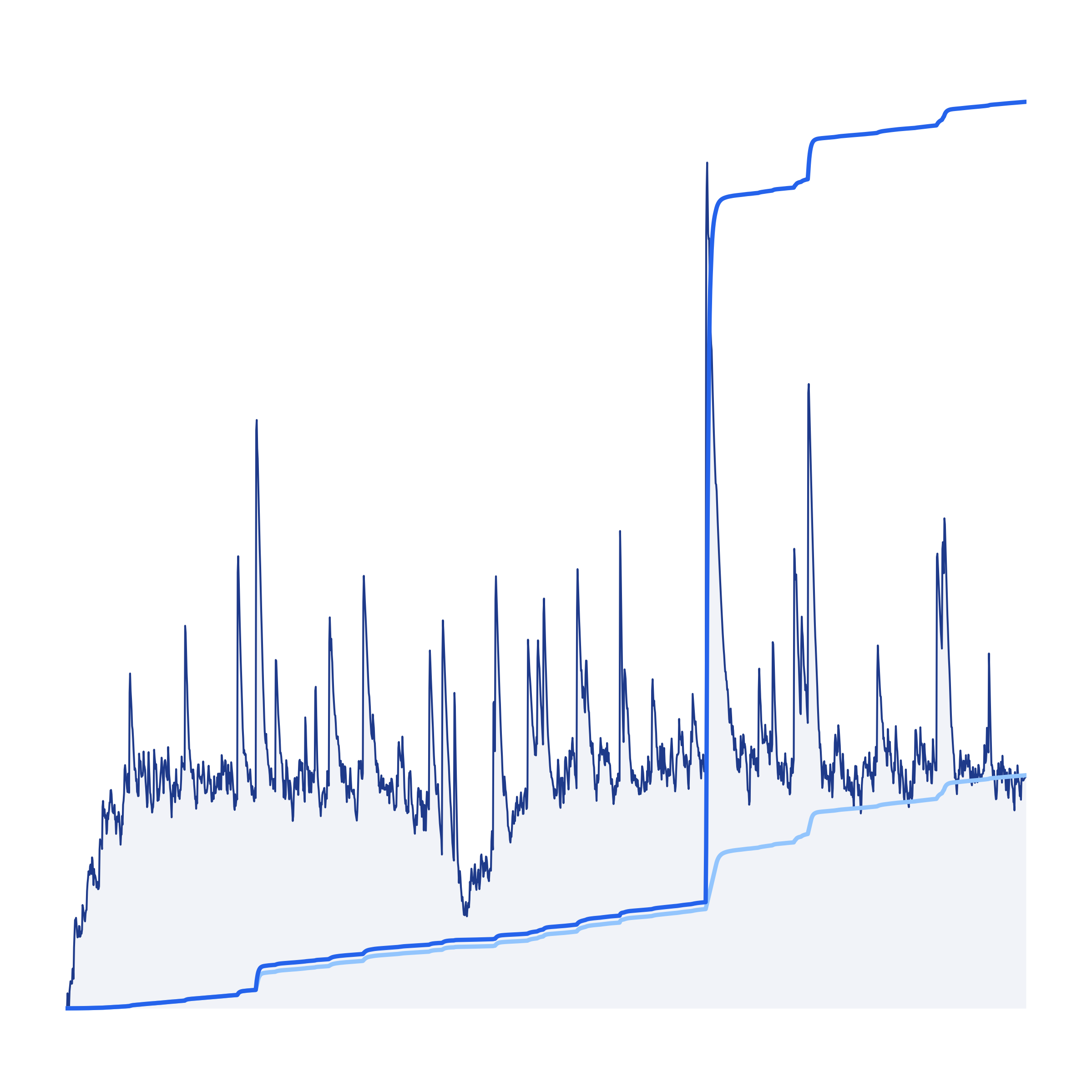
The whole limit in ninety seconds
Why measurement range matters when the exposure limit is low. A dust sensor that stops at 10 mg/m³ reports a clean shift for a day that spent 148% of the limit in one five-minute plume.
-

Prediction of dynamic mooring responses of a floating wind turbine using an artificial neural network
A neural-network surrogate for mooring-line tensions on the OC3-Hywind floating wind turbine. Trained on 32 wave states, it reaches ~71% correlation with the reference solver at a fraction of the runtime — useful in early-stage design and fatigue iteration.
F.A. Bjørni, S. Lien, T. Aa. Midtgarden, Geir Kulia, A. Verma, Z. Jiang. IOP Conf. Series, 2021. 2021.
-

Real-time passive control of wave energy converters using the Hilbert–Huang transform
A passive-control strategy for wave-energy converters that adapts damping to instantaneous wave frequency rather than using static tuning. HHT supplies the frequency at every sample; the adaptive controller improves energy absorption over fixed-gain in irregular seas.
Paula B. Garcia-Rosa, Geir Kulia, John V. Ringwood, Marta Molinas. IFAC-PapersOnLine (Elsevier). 2017.
News
Newsroom
-
Arpuro Labs takes over from Signal Analysis Lab
Arpuro Labs is now wholly owned by the engineers who built the dust-monitoring platform at Signal Analysis Lab. The new structure dedicates the company entirely to industrial particulate-matter monitoring.
-

Industrial dust sensors with ±15% accuracy and no drift after six months
Arpuro PM sensor delivers ±15% accuracy with no drift after 6 months in harsh industrial sites. Site-specific calibration adapts to varied dust chemistries.
-

Real-time dust monitoring for safer, more sustainable industry
Business Norway profiles our work on continuous particulate-matter monitoring for industrial operations — connecting worker-health protection, environmental compliance, and operational efficiency into a single instrumented platform.
Newsletter
Have it come to you.
Everything above — Blog, Field Notes, Newsroom — sent by email when it goes up. No schedule: you hear from us when there is something to read.
Your address stays with us, never sold.